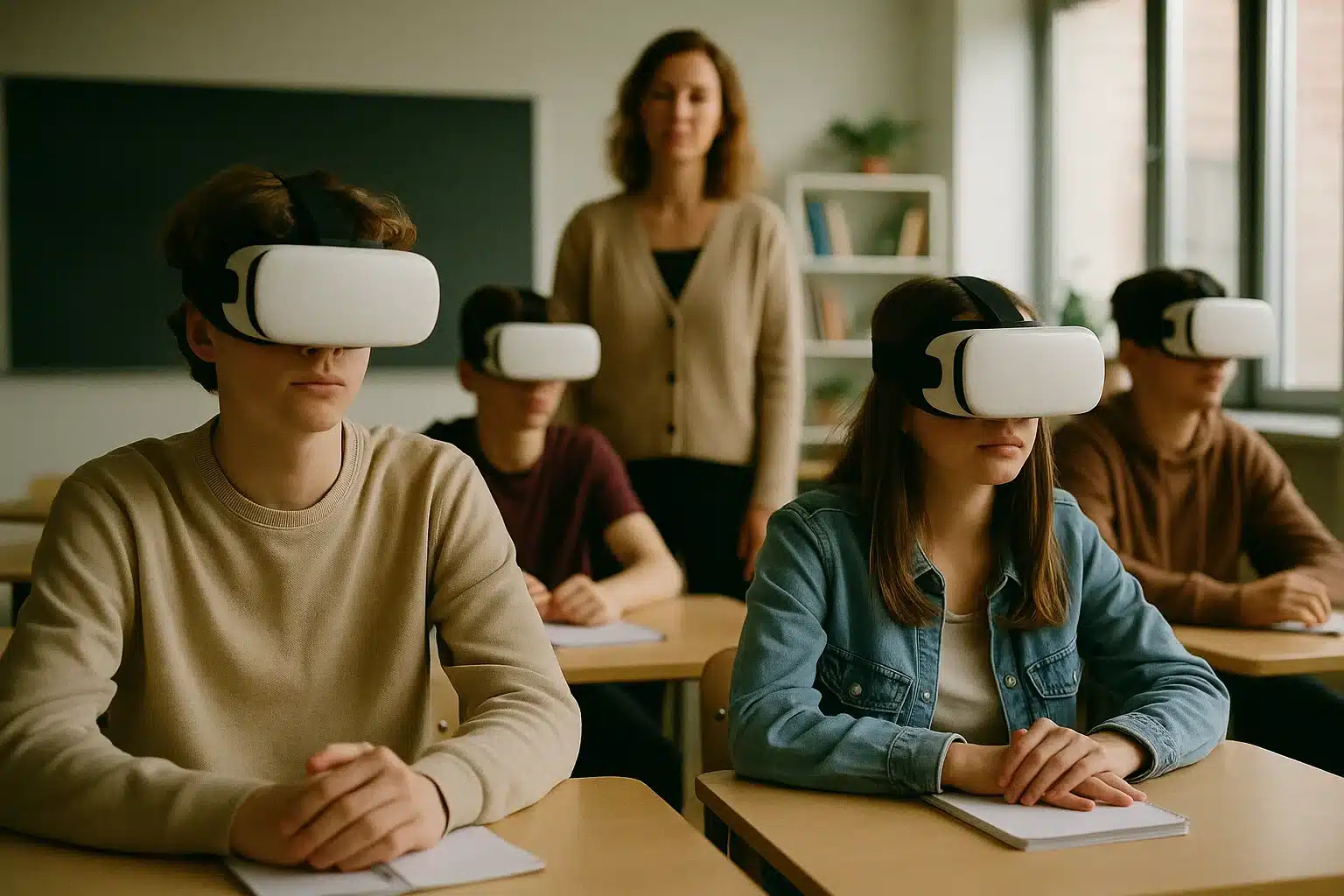
Virtual reality technology is reshaping how Kiwi students learn, offering immersive experiences that traditional teaching methods simply cannot match. From exploring ancient Rome to conducting virtual chemistry experiments, VR is creating engaging educational opportunities across New Zealand schools and tertiary institutions. This technology allows students to step inside their lessons, making abstract concepts tangible and memorable.
The adoption of VR in education represents a significant shift from passive learning to active participation. Students can now walk through historical sites, manipulate complex molecular structures, or practice surgical procedures in a risk-free environment. This hands-on approach caters to different learning styles and helps students retain information more effectively than conventional classroom instruction.
New Zealand schools are implementing VR across various subjects with remarkable success. Science classes use virtual laboratories where students can conduct experiments without safety concerns or expensive equipment. Geography lessons transport students to different continents, allowing them to explore ecosystems and geological formations firsthand. History students can witness pivotal moments, from the signing of the Treaty of Waitangi to exploring Māori pā sites in their original context.
Mathematics teachers are using VR to visualise complex geometric concepts and statistical data. Students can walk through three-dimensional graphs, manipulate shapes, and see mathematical principles in action. Language learning benefits enormously from VR environments where students practice conversations with virtual native speakers or explore cultural contexts of the languages they’re studying.
Art and design programmes incorporate VR tools for creative expression and spatial understanding. Students can sculpt in three-dimensional space, paint on virtual canvases, or design architectural structures they can immediately walk through and evaluate. These applications extend far beyond entertainment, providing genuine educational value that enhances comprehension and creativity.
Virtual reality addresses the diverse learning preferences found in New Zealand classrooms. Visual learners benefit from seeing concepts in three-dimensional space, while kinesthetic learners engage through physical interaction with virtual objects. Auditory learners receive rich soundscapes and narrated experiences that complement the visual elements.
Students with learning disabilities often find VR particularly beneficial. The technology can slow down processes, repeat demonstrations, and provide multiple ways to access the same information. For students with attention difficulties, the immersive nature of VR helps maintain focus by eliminating distractions and creating engaging, interactive experiences.
The Ministry recognises the potential of emerging technologies to support diverse learners. VR environments can be customised to individual needs, allowing students to progress at their own pace while ensuring they master essential concepts before moving forward.
Implementing VR in educational settings requires careful planning and investment in appropriate technology. Schools need VR headsets, powerful computers capable of running VR software, and reliable internet connections for accessing cloud-based educational content. Popular educational VR platforms include Google Expeditions, ClassVR, and Immersive VR Education, each offering different strengths for various subjects.
Hardware considerations include choosing between tethered headsets that offer high-quality experiences but require powerful computers, and standalone devices that provide mobility but may have limited processing power. Many New Zealand schools start with more affordable options like smartphone-based VR viewers before investing in dedicated VR systems.
Network infrastructure is crucial for successful VR implementation. Schools must ensure their wireless networks can handle the bandwidth requirements of multiple VR devices operating simultaneously. Cloud-based VR content requires stable, high-speed internet connections to prevent disruptions during lessons.
Successful VR integration depends heavily on teacher confidence and competence with the technology. Many New Zealand educators initially feel overwhelmed by VR systems, but with proper training, they quickly recognise the educational potential. Professional development programmes focus on both technical skills and pedagogical applications of VR technology.
Teacher training covers practical aspects like operating VR equipment, troubleshooting common issues, and managing classroom safety during VR sessions. Equally important is learning how to integrate VR experiences meaningfully into existing curricula rather than using the technology as a novelty. Effective VR lessons require careful preparation, clear learning objectives, and follow-up activities that reinforce the virtual experience.
Collaboration between teachers is essential for building VR expertise within schools. Early adopters share their experiences, successful lesson plans, and practical tips with colleagues. Many schools establish VR champion programmes where tech-savvy teachers mentor others and help build institutional knowledge about effective VR implementation.
Budget constraints represent the most significant barrier to VR adoption in New Zealand schools. Quality VR systems require substantial initial investment, and ongoing costs include software licences, content updates, and equipment maintenance. Schools often start with pilot programmes in specific subjects before expanding VR use across the curriculum.
Safety concerns include motion sickness, eye strain, and physical safety during VR use. Schools develop protocols for VR sessions, including time limits, regular breaks, and careful supervision. Age-appropriate guidelines ensure younger students use VR safely, with many schools limiting intensive VR use to students over 13 years old.
Technical support challenges arise when VR equipment malfunctions during lessons. Schools need reliable technical support, either through internal IT staff or external service providers. Having backup plans and alternative activities ensures lessons can continue when technology fails.

Virtual reality technology continues evolving rapidly, with new educational applications emerging regularly. Augmented reality (AR) is increasingly combined with VR to create mixed-reality experiences that blend virtual elements with real-world environments. This hybrid approach offers even more flexibility for educational applications.
Artificial intelligence integration will personalise VR educational experiences, adapting content difficulty and pacing to individual student needs. Machine learning algorithms will track student progress and suggest optimal learning paths through virtual environments. These developments will make VR education more effective and accessible to students with varying abilities and backgrounds.
Collaborative VR environments are developing rapidly, allowing students from different schools or even countries to share virtual learning experiences. This technology will enable New Zealand students to collaborate with international peers, participate in global virtual field trips, and access educational resources from around the world.
Assessing the effectiveness of VR in education requires new approaches to measuring student learning outcomes. Traditional testing methods may not capture the full benefits of immersive learning experiences. Schools are developing alternative assessment strategies that evaluate practical application of knowledge gained through VR experiences.
Research studies in New Zealand schools are beginning to show positive outcomes from VR implementation. Students demonstrate improved retention rates, increased engagement levels, and better understanding of complex concepts when VR is integrated thoughtfully into lessons. Long-term studies will provide more comprehensive data about VR’s educational impact.
Student feedback consistently highlights increased enjoyment and motivation when learning through VR. However, educators emphasise that technology alone doesn’t improve learning outcomes—effective pedagogy remains essential for maximising VR’s educational potential.
Virtual reality is establishing itself as a powerful educational tool in New Zealand, offering unprecedented opportunities to enhance student learning across all subjects. While implementation challenges exist, the benefits of immersive, interactive learning experiences are driving continued adoption in schools throughout the country. As technology improves and costs decrease, VR will become increasingly accessible, transforming how Kiwi students engage with educational content and preparing them for an increasingly digital future.
This article is proudly brought to you by the New Zealand Knowledge Collective. We bring together expert insights and practical wisdom for informed living in today’s world. Through our network of Kiwi specialists and evidence-based resources, we’re dedicated to enhancing your knowledge journey across Aotearoa and beyond. Explore our latest posts and stay informed with the best in Books, Travel, Online Education, Personal Finance & Investment, Technology, and Home & Interior Design!
Hamish says:
Reckon the schools round here would be better off taking the kids out to the local farm or stream for a day instead of dropping ten grand on headsets that half the students get sick wearing anyway.
Brad W. says:
Nah mate, real hands-on stuff beats VR most days. Schools spending big on the headsets when a proper field trip costs way less and sticks with kids longer.
Hannah Wilson says:
The immersive side of VR is genuinely valuable, but I’m not convinced it’s the answer for every subject. We’ve seen schools invest heavily in this tech only to find students get more out of a well-designed lab practical or a visit to a real museum. Sometimes the engagement comes from the novelty rather than deeper learning. Worth being thoughtful about where VR actually adds something that can’t happen otherwise.