Anyone who has flown from Auckland to London or Christchurch to New York knows the peculiar exhaustion that settles in somewhere over the Pacific. New Zealand’s geographic isolation gifts us incredible landscapes at home, but it also means any trip to Europe, the United Kingdom, or the eastern seaboard of the United States demands a commitment to spending the better part of a day inside a metal tube. While you can’t shrink the kilometres, you can absolutely change how your body and mind cope with them.
Long before you step onto the plane, the way you prepare can determine whether you arrive feeling shattered or surprisingly functional. Small, deliberate choices around sleep, nutrition, and movement take the sting out of marathon travel. This guide brings together practical, Kiwi-relevant advice—grounded in health research and hard-won experience—to help you survive your next 24-plus-hour journey and actually enjoy the first days of your holiday or business trip.
A surprising amount of long-haul misery comes down to what happens before you even reach the airport. If you treat the departure date as the beginning of your travel strategy, you’re already behind. The World Health Organization suggests gradually shifting your bedtime by an hour each night in the days leading up to departure, nudging your internal clock towards your destination’s time zone. For Kiwis heading west to Asia or Europe, that means staying up a little later each evening; for those flying east to the Americas, getting to bed progressively earlier.
Equally important is what you carry. A well-stocked carry-on can be the difference between a flight that drags and one where you feel vaguely human. Beyond the obvious passport and wallet, pack a lightweight change of clothes, a microfibre towel for freshening up in transit, compression socks to support circulation on ultra-long sectors, and a refillable water bottle that cabin crew can top up. Another tip many New Zealand travellers swear by: pack your noise-cancelling headphones and a decent eye mask in an outside pocket so you’re not rummaging overhead the moment the seatbelt sign flicks off.
Where you sit for twelve or thirteen hours straight matters much more than the meal you’ll be served. If you can, check the aircraft layout on a site like SeatGuru when you book. Many Kiwi travellers prefer an aisle seat towards the front of the economy cabin for quicker disembarkation and the ability to stand and stretch without disturbing seatmates. If you plan to sleep and don’t mind climbing over a neighbour, a window seat with a bulkhead or exit row location can give you space to lean without slumping into the aisle.
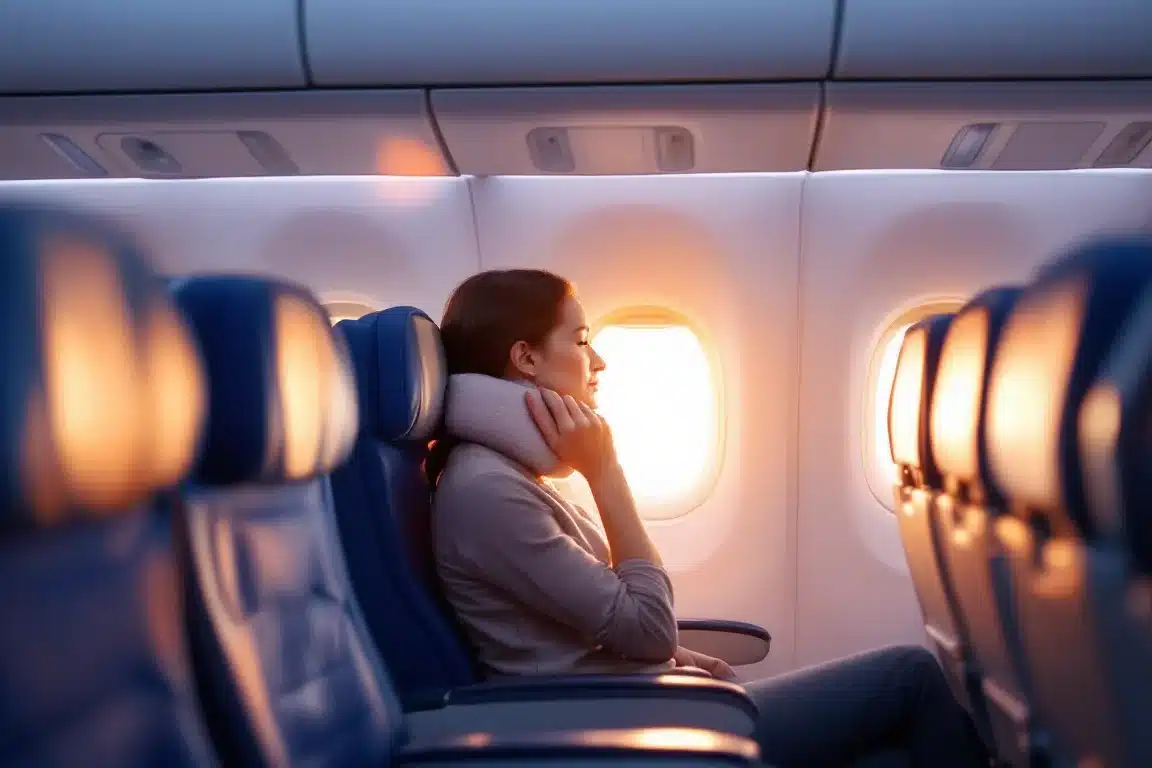
Alongside your seat choice, think about your in-flight kit in layers. Keep the essentials—lip balm, hand cream, phone charger, snacks—in a small pouch that slips into the seat pocket. Stash a thin merino layer or a soft pashmina within reach because aircraft cabins oscillate between stuffy and frigid. A decent neck pillow is non-negotiable, but forget the inflatable U-shaped ones that leave your chin lolling; a microbead or memory foam wrap-around pillow supports your head far better and lets you sleep in a more natural position.
Altitude and pressurised air do strange things to your digestion and hydration levels. The dry cabin air means you lose moisture with every breath, so sipping water regularly—around 250 millilitres per hour—helps fend off headaches and that foggy fatigue. Skip the free alcohol if you genuinely want to rest; even one glass of wine at cruising altitude hits harder and fragments your sleep cycles. Herbal tea or simply hot water with a slice of lemon from the galley are better bets when you’re craving something warm.
Movement is the quiet hero of long-haul comfort. Every 90 minutes, stand up, walk the length of the cabin, and do some gentle calf raises near the galley. While seated, trace the alphabet with your feet, roll your ankles, and tighten and release your thigh muscles. These tiny exercises promote blood flow and dramatically reduce the risk of deep vein thrombosis, a concern on flights lasting more than ten hours. Don’t worry about looking silly—half the plane is doing the same thing in their socks.
Sleeping upright in a noisy, vibrating environment is an art form. The first rule is to create a sensory cocoon. Quality silicone earplugs paired with over-ear noise-cancelling headphones block both the engine drone and the occasional screaming infant. A contoured eye mask that cups rather than presses on your eyes makes a world of difference, especially on night flights where cabin lights dim but screens still glow across the aisle. Wearing the mask before you intend to sleep signals to your brain that it’s time to wind down.
Timing your sleep attempt matters too. If you’re flying into a daytime arrival, aim to sleep as late in the flight as possible so you align with your destination’s night. Short power naps earlier in the journey are fine, but resist the temptation to conk out for six hours right after take-off unless that matches the local night at your arrival city. A small dose of melatonin, widely available over the counter in New Zealand, can help nudge your body towards rest when taken about 30 minutes before you plan to close your eyes. As with any supplement, check with your GP first.

The moment the wheels touch down, a different kind of discipline begins. Resist the urge to nap heavily if you land in the morning or early afternoon. Instead, drop your bags at your accommodation and head straight outside into natural light. Sunlight is the most powerful tool for resetting your circadian rhythm, so even a slow wander through a park or streetside café keeps your brain clock tuned to the local time. If you absolutely must sleep, set a firm 30-minute alarm and get up the instant it rings.
Food can also anchor you in the new time zone. Eat at local meal times from the start, even if your stomach feels like it’s been dropped into a different dimension. A light, protein-rich meal sustains you better than carb-heavy comfort food that triggers an energy crash. Staying hydrated during that first afternoon is critical; many travellers mistake the symptoms of dehydration—irritability, brain fog, aching muscles—for jet lag alone. A bottle of water in your daypack and a conscious effort to avoid back-to-back coffees will pay off by evening.
Finally, be kind to yourself. A 24-hour journey is a genuine physical ordeal, and your body needs time to recalibrate. Accept that the first 48 hours might feel a little woolly, and build that into your plans. The reward is waking up on day three with clear eyes and a real appetite for wherever you’ve landed.
Long-haul travel from New Zealand doesn’t have to be a penance. With thoughtful preparation, in-flight habits that prioritise hydration and movement, and a deliberate first day at your destination, you can turn a gruelling transit into a manageable—and even mildly enjoyable—part of the adventure. The secret isn’t any single trick; it’s stacking small, consistent practices that respect what your body actually needs when you’re eight time zones from home. Try a few of these strategies on your next big trip, and you might be surprised at how much fresher you feel on the other side of the world.
This article is proudly brought to you by the New Zealand Knowledge Collective. We bring together expert insights and practical wisdom for informed living in today’s world. Through our network of Kiwi specialists and evidence-based resources, we’re dedicated to enhancing your knowledge journey across Aotearoa and beyond. Explore our latest posts and stay informed with the best in Books, Travel, Online Education, Personal Finance & Investment, Technology, and Home & Interior Design!
Simon Brown says:
Have you factored in how much a tight connection at LAX or Dubai can unravel when the first leg runs late. Just be aware that building in a buffer day at the stopover is worth the extra cost, especially if you’re booking separate tickets.