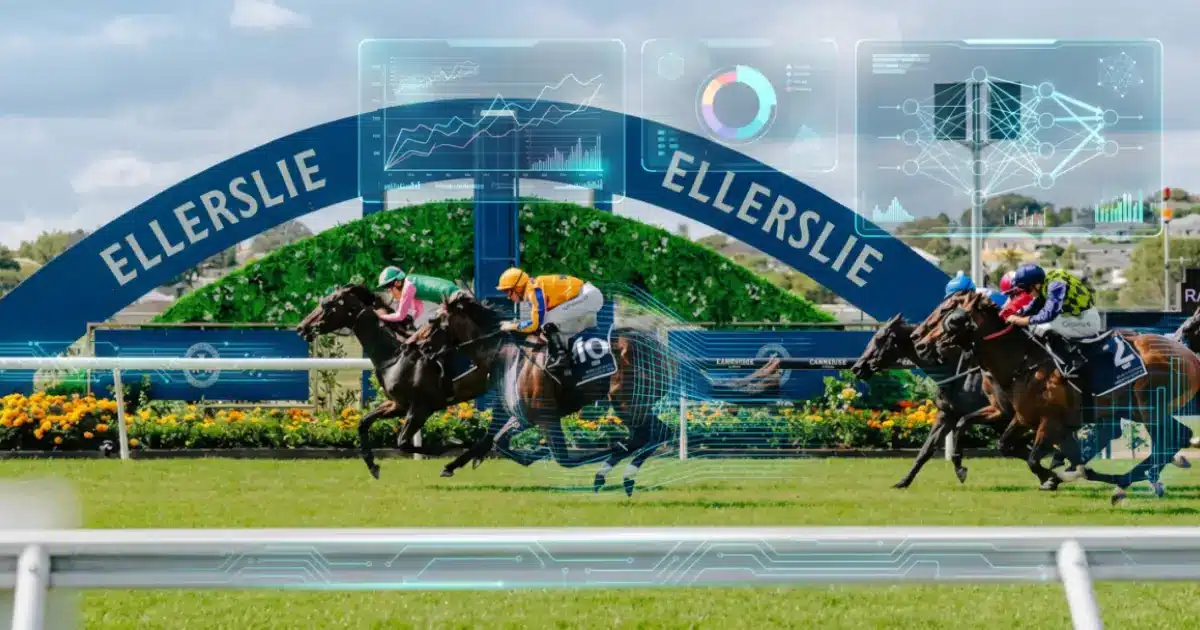
For decades, New Zealand punters have relied on the same tools: form guides, replays, gut feel, and the occasional tip from a mate who “knows someone in the stable.” But over the last few years, something has quietly shifted in the background of Kiwi racing — a data revolution that’s now being accelerated by artificial intelligence.
If you’ve ever watched a horse storm home from the back and wondered how you missed it, you’re not alone. Many punters have felt that sting. The form guide didn’t warn you. The replay didn’t make it obvious. The commentators called it “a courageous finish,” but that doesn’t help you next time.
What would have helped? The answer is the same one that’s driving the rise of AI in NZ racing today: sectional times.
And that’s where AI tools like Winning Post are stepping in — not to replace punters, but to give them access to insights that were previously impossible to process manually.
Sectional times — the split times recorded at various points during a race — have gone from niche to mainstream in New Zealand. Loveracing.nz now publishes them for almost every meeting, and they’ve become the foundation for modern data‑driven analysis.
Why? Because the final time tells you who won. The sectionals tell you who’s about to.
A horse that runs 600m in 34 seconds from the front is doing something completely different from a horse that runs 600m in 34 seconds from the tail. The clock is the same. The performance isn’t. Sectionals reveal the difference.
AI thrives on this kind of data — structured, consistent, and rich with hidden patterns.
A race isn’t one continuous effort. It’s a sequence of phases:
When humans look at these splits, they see numbers. When AI looks at them, it sees patterns:
This is the kind of analysis that used to take professional form analysts hours. AI does it instantly — and consistently.
New Zealand’s racing landscape is uniquely suited to AI‑driven insights.
Te Rapa, Trentham, Riccarton, Hastings — each plays differently. Sectionals reveal how horses adapt to each surface, and AI can learn those patterns over time.
A drying Wellington track can flip from favouring leaders to favouring closers in the space of four races. AI can detect this shift before the market reacts.
As fields become more competitive, final times tell you less. Sectionals tell you everything.
Most punters still handicap the old‑fashioned way. AI tools have the advantage of working with data others ignore.

This is where the technology becomes genuinely useful for everyday punters.
A human can track sectional patterns for maybe 20–30 horses. AI can track every horse in every race, across every NZ meeting, every week.
Winning Post draws on sectional data from Loveracing and uses it as one of many inputs in its prediction system. At a high level, the AI helps identify:
It doesn’t replace punter judgment — it amplifies it. Think of it as a second set of eyes that never gets tired, never misses a pattern, and never forgets a run.
A horse running 4th, 5th, 4th looks average — until you see its final 600m improving each run. AI picks this up instantly.
A leader who wins off a slow tempo can look dominant. AI sees the truth: the horse was gifted the race shape.
If leaders are running the fastest final 600m in every race, the track is favouring on‑pace runners. AI flags this before most punters notice.
A fast split in a weak Rating 65 doesn’t mean much when stepping up to Rating 75. AI adjusts for this automatically.
A backmarker drawn low on a leader‑biased track? AI knows it’s the wrong setup.
Final 600m: 35.6 → 35.2 → 34.8 Finishing positions: 4th → 5th → 4th AI sees a horse ready to win. The market doesn’t.
Two wins off slow tempos. Weak closing splits. AI knows the horse is exposed when the pace heats up.
Leaders dominate early races. Your backmarker in race 7? Wrong day, wrong pattern.
A personal‑best sectional in a weak field looks impressive — until AI compares it to the stronger grade.
AI isn’t about replacing instinct or experience. It’s about giving punters access to insights that were previously impossible to process manually.
Tools like Winning Post are built specifically for NZ racing — calibrated for Te Rapa, Ellerslie, Riccarton, Trentham, Hastings, Cambridge Synthetic, and every other local track.
They don’t just crunch numbers. They reveal the hidden form that most punters never see.
If you’ve ever felt like you were one step behind the smart money, AI is how you catch up — and sometimes get ahead.
This article is proudly brought to you by the New Zealand Knowledge Collective. We bring together expert insights and practical wisdom for informed living in today’s world. Through our network of Kiwi specialists and evidence-based resources, we’re dedicated to enhancing your knowledge journey across Aotearoa and beyond. Explore our latest posts and stay informed with the best in Books, Travel, Online Education, Personal Finance & Investment, Technology, and Home & Interior Design!
jess.lee says:
The transparency angle is what gets me, because at least when an algorithm makes a call you can actually trace the reasoning behind it, whereas a gut feeling just evaporates the moment it goes wrong.
Tania R. says:
Fair dinkum, you’ve nailed it there. The real issue is folk expecting the data to do their thinking for them, not the data itself. Down here at the shop we see punters make dodgy calls all the time, app or no app. At least with the algorithms you know what you’re getting. A mate’s hunch changes every time he’s had a beer.
Kelly says:
Nah, I reckon the algorithms get a rougher deal than they deserve here. Yeah, plenty of punters are chasing magic solutions, but that’s not really an algorithm problem is it. That’s just how people are with money. I’ve seen mates lose big chunks on a tip from someone down the pub just as fast as they do on an app. The app at least works the same way every time. It doesn’t get drunk and suddenly think it’s a genius
Luke M. says:
Fair point about not knowing what data feeds these things, but I reckon you’re being a bit hard on the algorithms themselves. The real issue is the punters treating them like a magic crystal ball instead of just another tool. I’ve watched blokes lose money on tips from a mate’s gut feeling just as quick as they do from an app. The difference is at least the app’s got
tim_van says:
so are these ai models actually trained on nz racing data or just generic horse racing stuff from overseas. cos that’d make a huge difference right. feels like half the punters using this stuff don’t even know what they’re feeding into their apps and just trusting the algorithm blindly. reckon that’s gonna bite people eventually.